
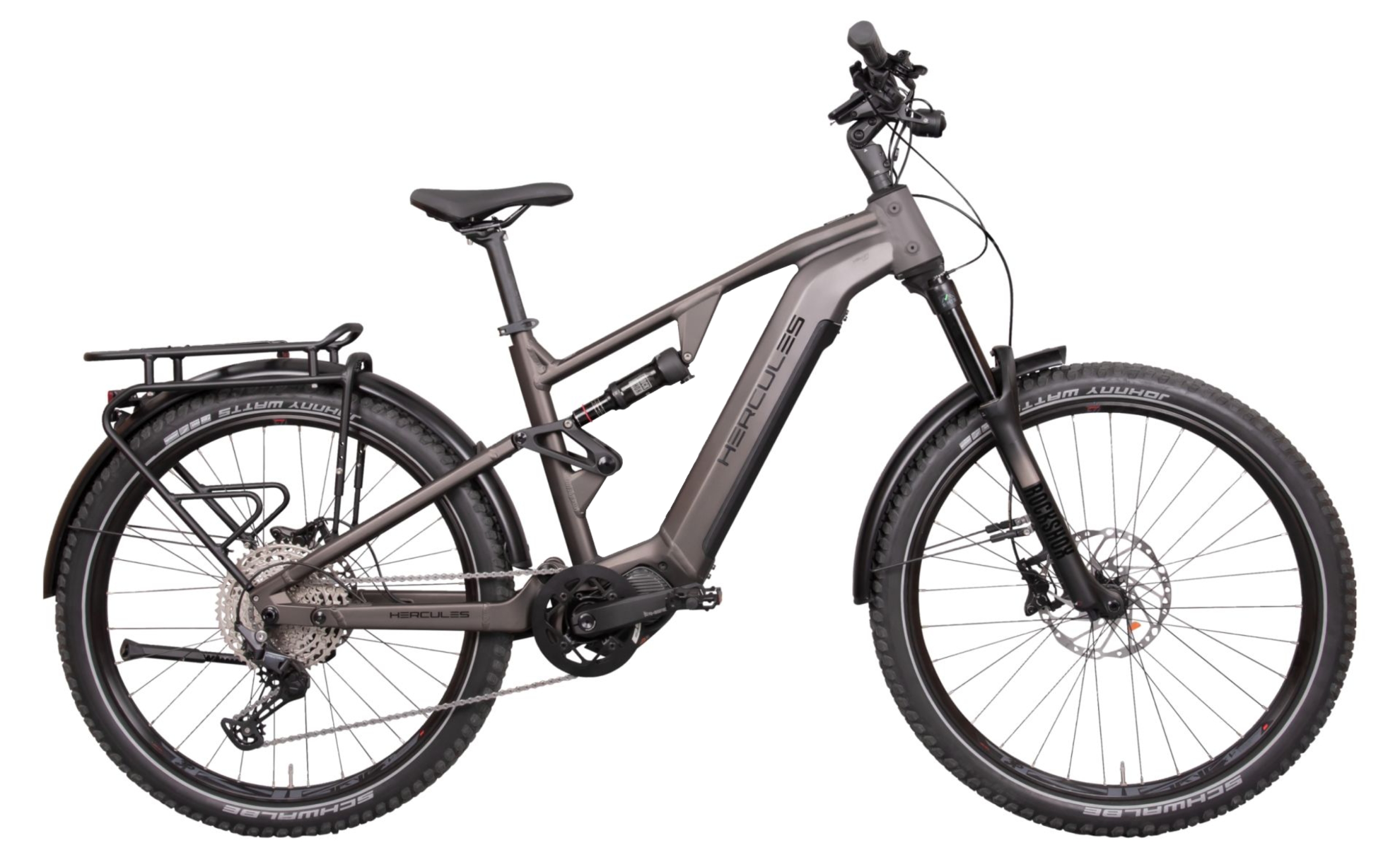
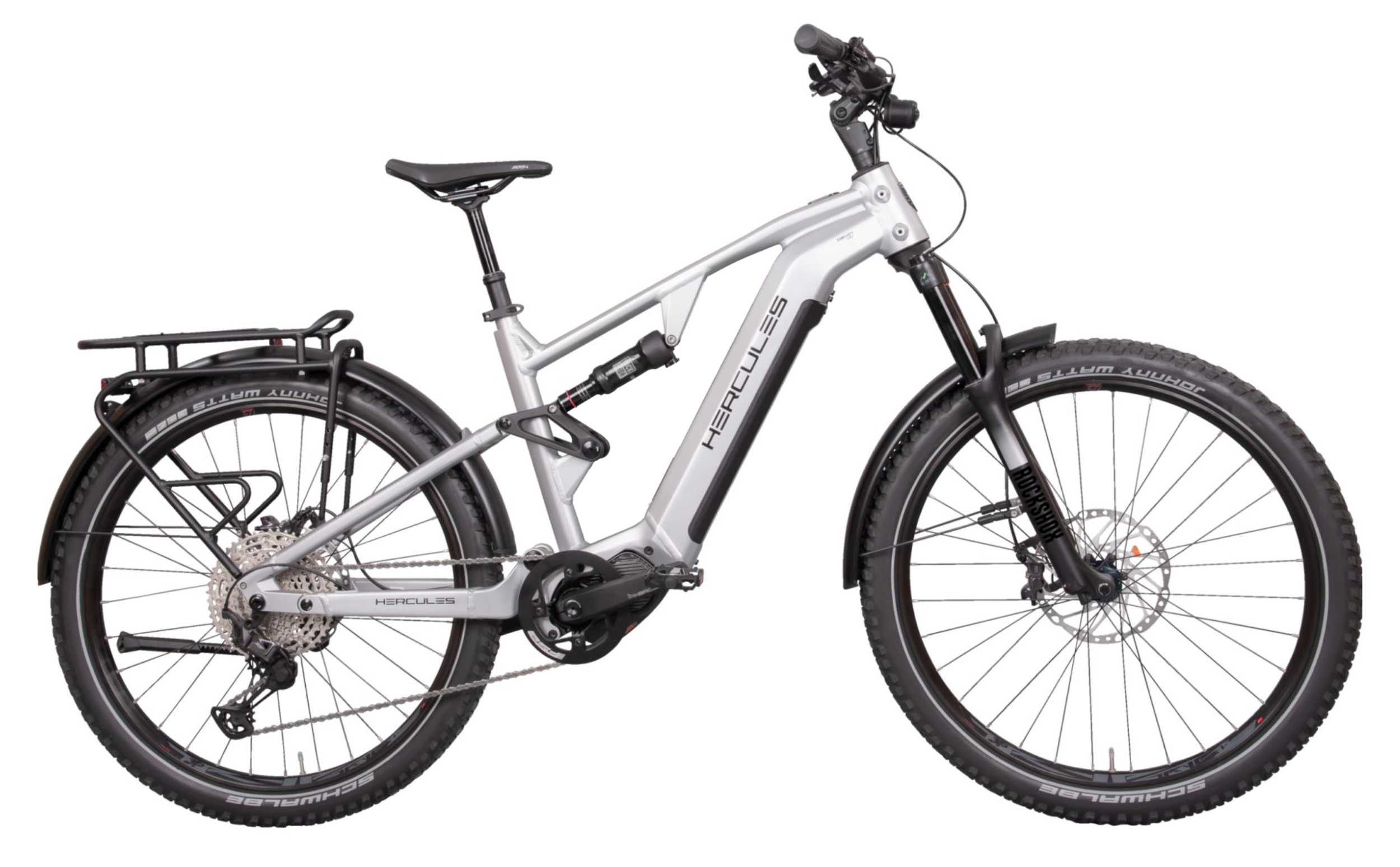
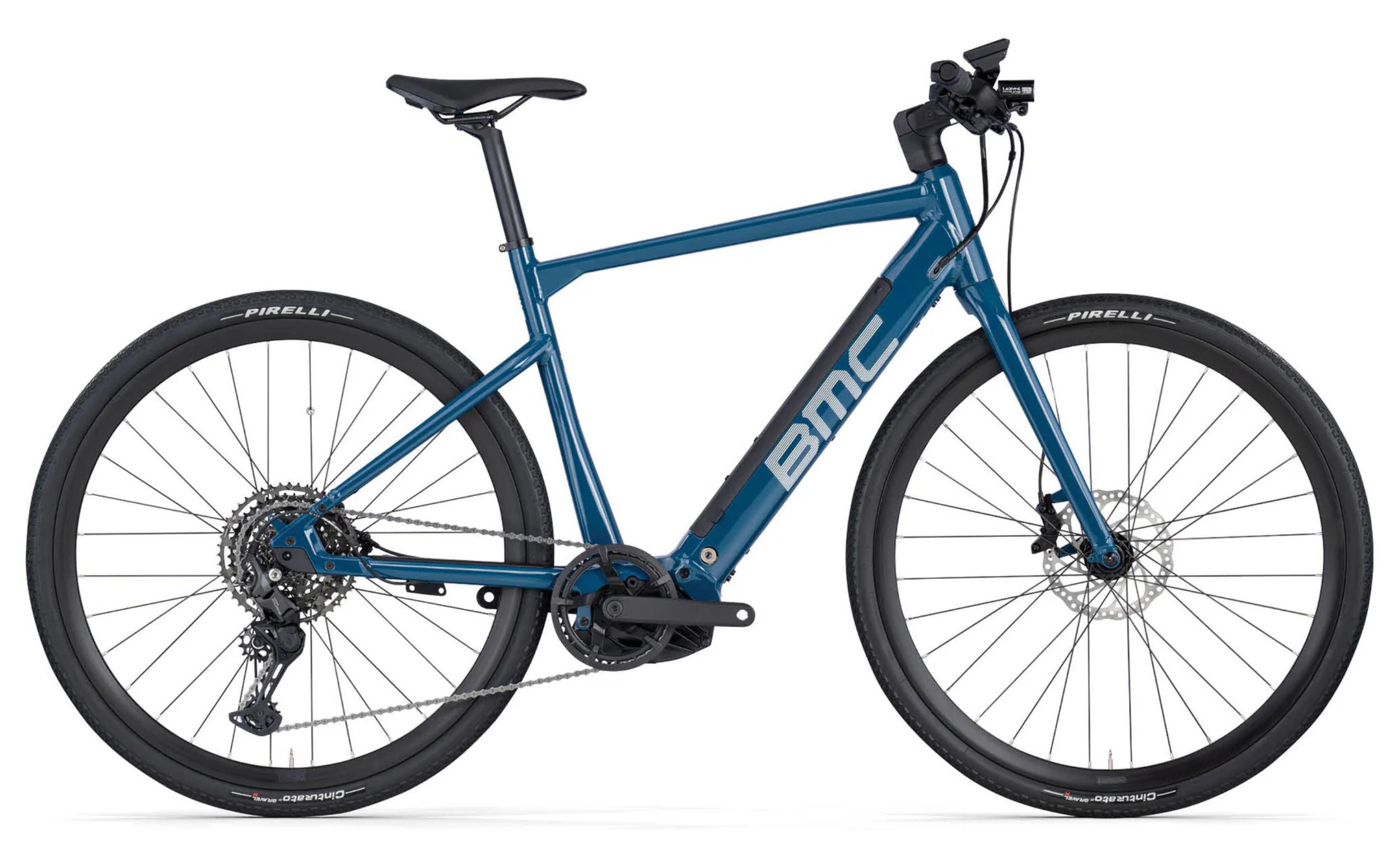
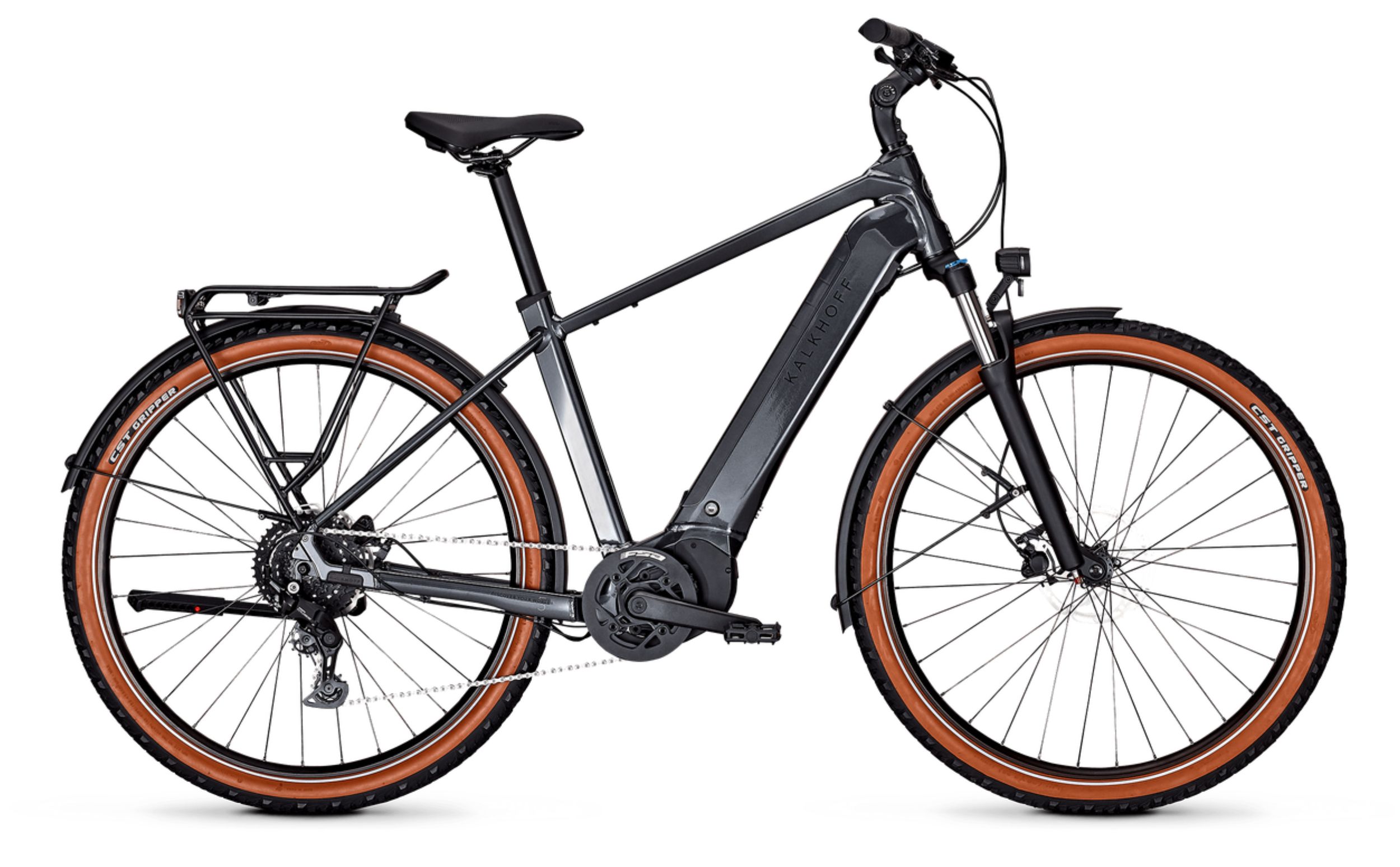
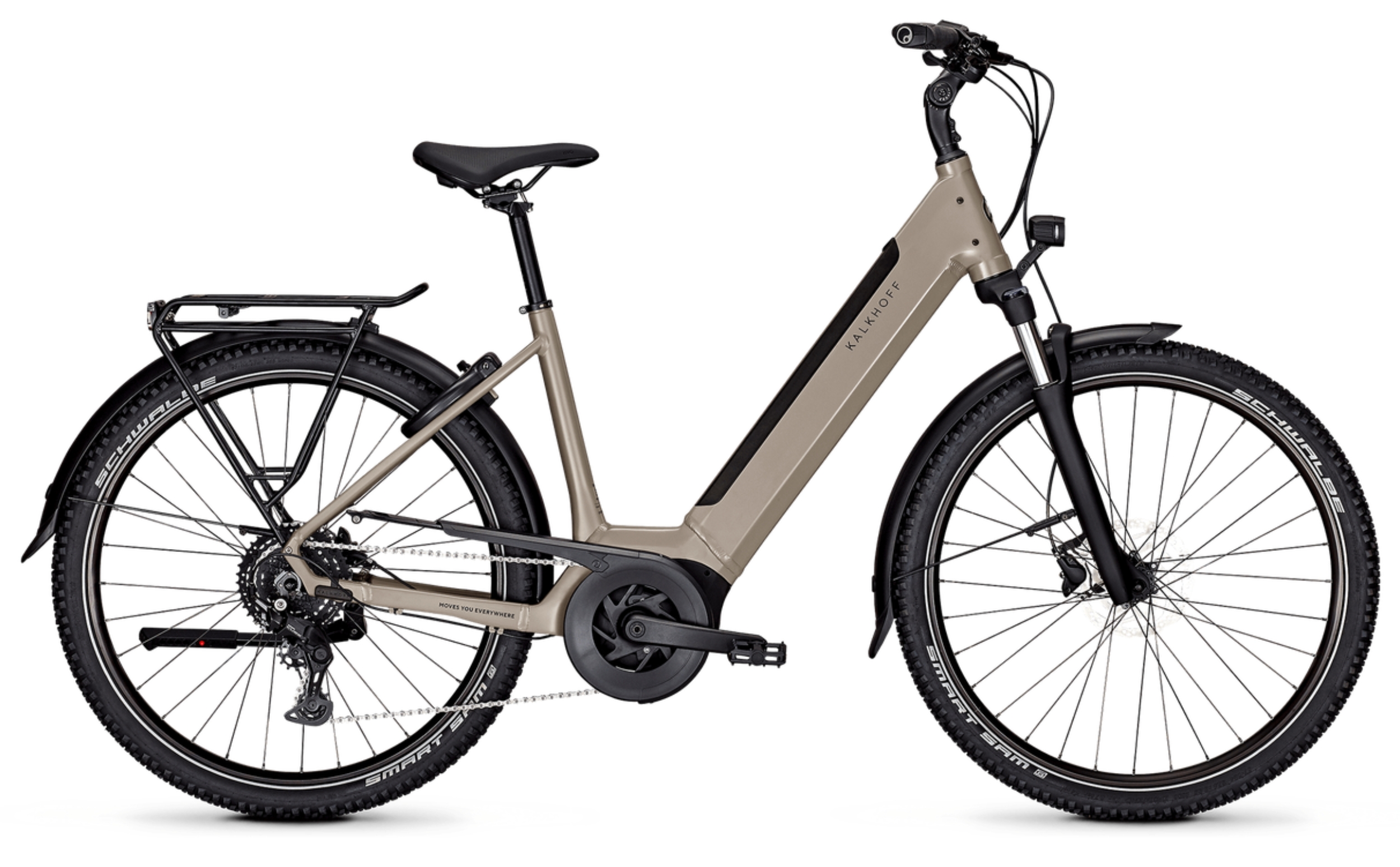


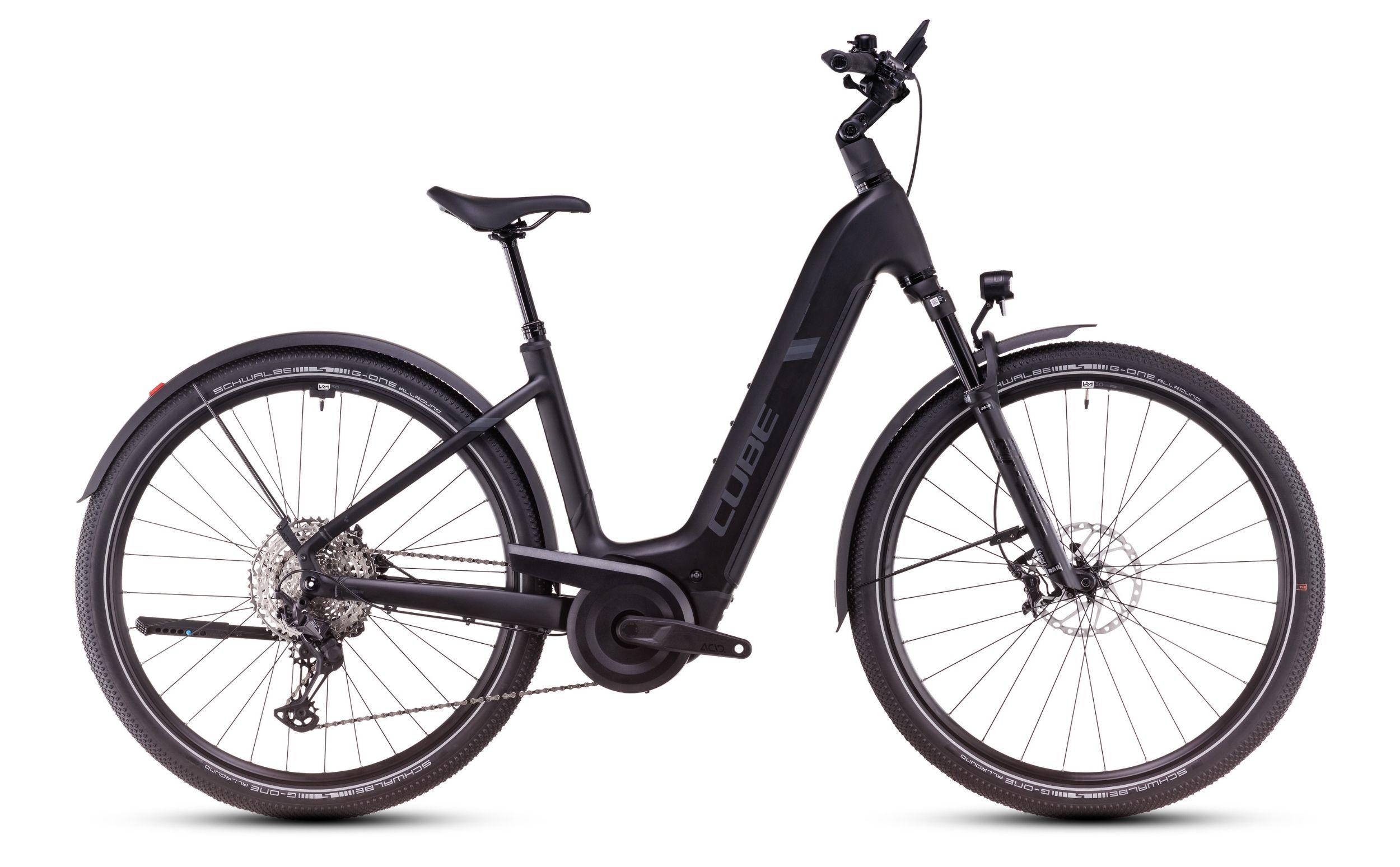


Trekking e-bike - your ultimate guide for adventure and everyday life
What is a trekking e-bike?
A trekking e-bike - also known as an e-trekking bike - combines the characteristics of a robust mountain bike with the comfort and features of a city bike. These bikes are specially designed for long distances, varied terrain and daily use. They are characterised by sturdy frames, powerful motors and high-quality batteries that ensure long ranges. With a trekking e-bike, you are ideally equipped for travelling safely in both urban and natural environments.
Advantages of a trekking e-bike
The biggest advantage of a trekking e-bike is its versatility and performance:
- Efficiency: with electric assistance, you can effortlessly master inclines and long distances - ideal for commuters and recreational athletes.
- Comfort: Thanks to ergonomic frame shapes and modern suspension systems, you can enjoy maximum riding comfort even on longer tours.
- Flexibility: Whether you are travelling in the city or off-road, a trekking e-bike adapts to your requirements.
- Eco-friendliness: With an e-bike, you can reduce CO₂ emissions and stay fit at the same time.
These benefits make the trekking e-bike the ideal choice for anyone who wants to be active in sports as well as manage everyday journeys effortlessly.
Technical features of a trekking e-bike
Trekking e-bikes offer special technical features that distinguish them from conventional bicycles. The most important features include:
| Characteristic | Description of the bike |
| Frame geometry | Enables an upright and ergonomic riding position that maximises riding comfort over long distances. |
| Motor power | Typically between 250 and 350 watts, which is ideal for urban and slightly hilly areas. |
| Battery capacity | High-quality lithium-ion batteries, often from Bosch, Shimano or Panasonic, ensure ranges of 80 to 150 kilometres - depending on the support level and terrain |
| Weight & load capacity | With a weight of between 20 and 27 kg and a maximum payload of around 130 to 170 kg, they offer a solid basis for riders of different heights and weights. |
| Tyre sizes | Usually equipped with 28 or 29-inch wheels - ideal for use on different surfaces |
These features make it clear that a trekking e-bike is far more than just an electric bike - it is a technically advanced means of transport that can meet the challenges of everyday life and adventurous tours.
The right frame shape for your trekking e-bike
The frame shape is one of the most important factors when it comes to riding comfort and user-friendliness. There are three main frame shapes:
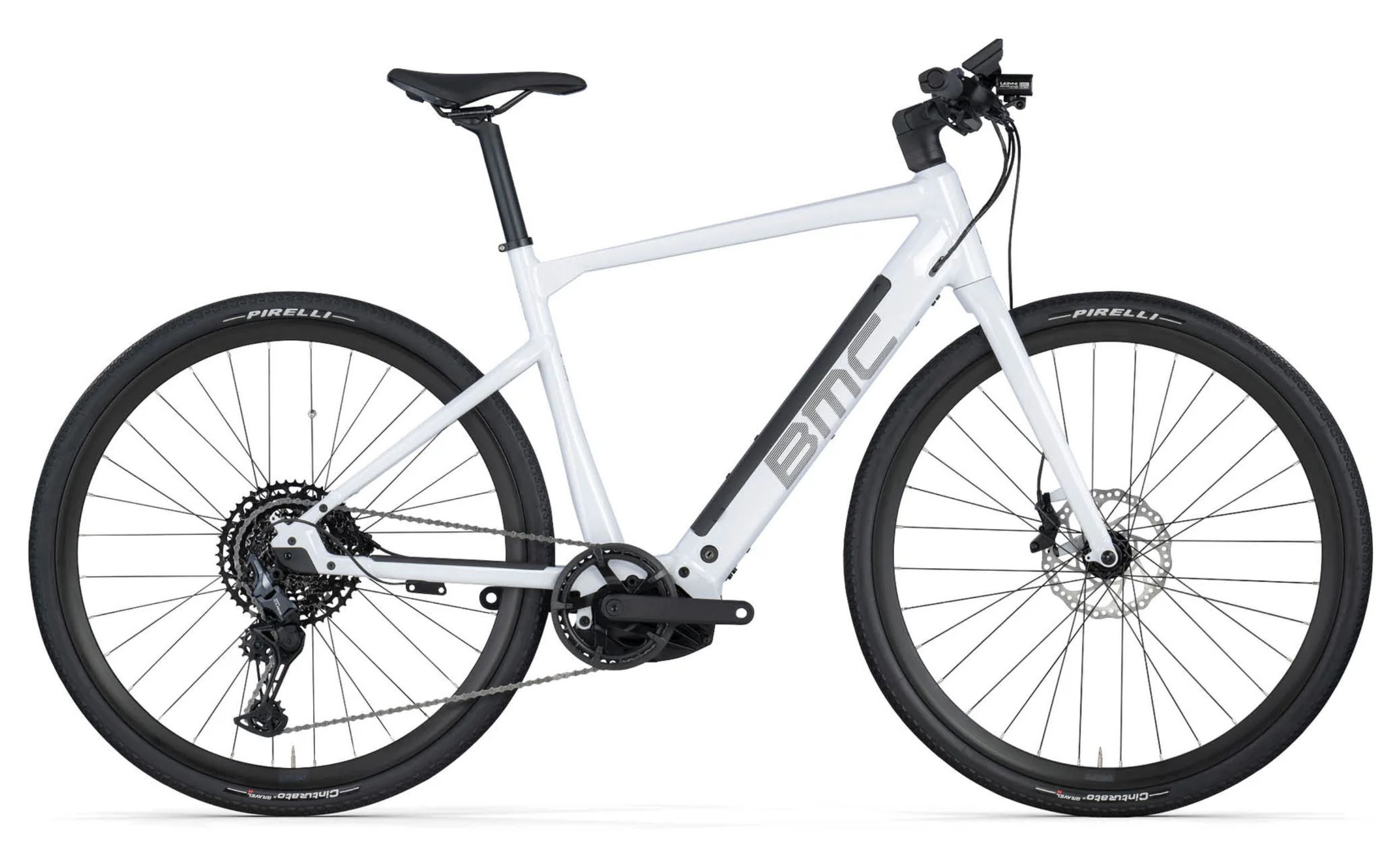
Diamond frame:
- Classic triangular structure between saddle, handlebars and bottom bracket
- Offers high rigidity and dynamics - ideal for sporty riders, mostly popular with men
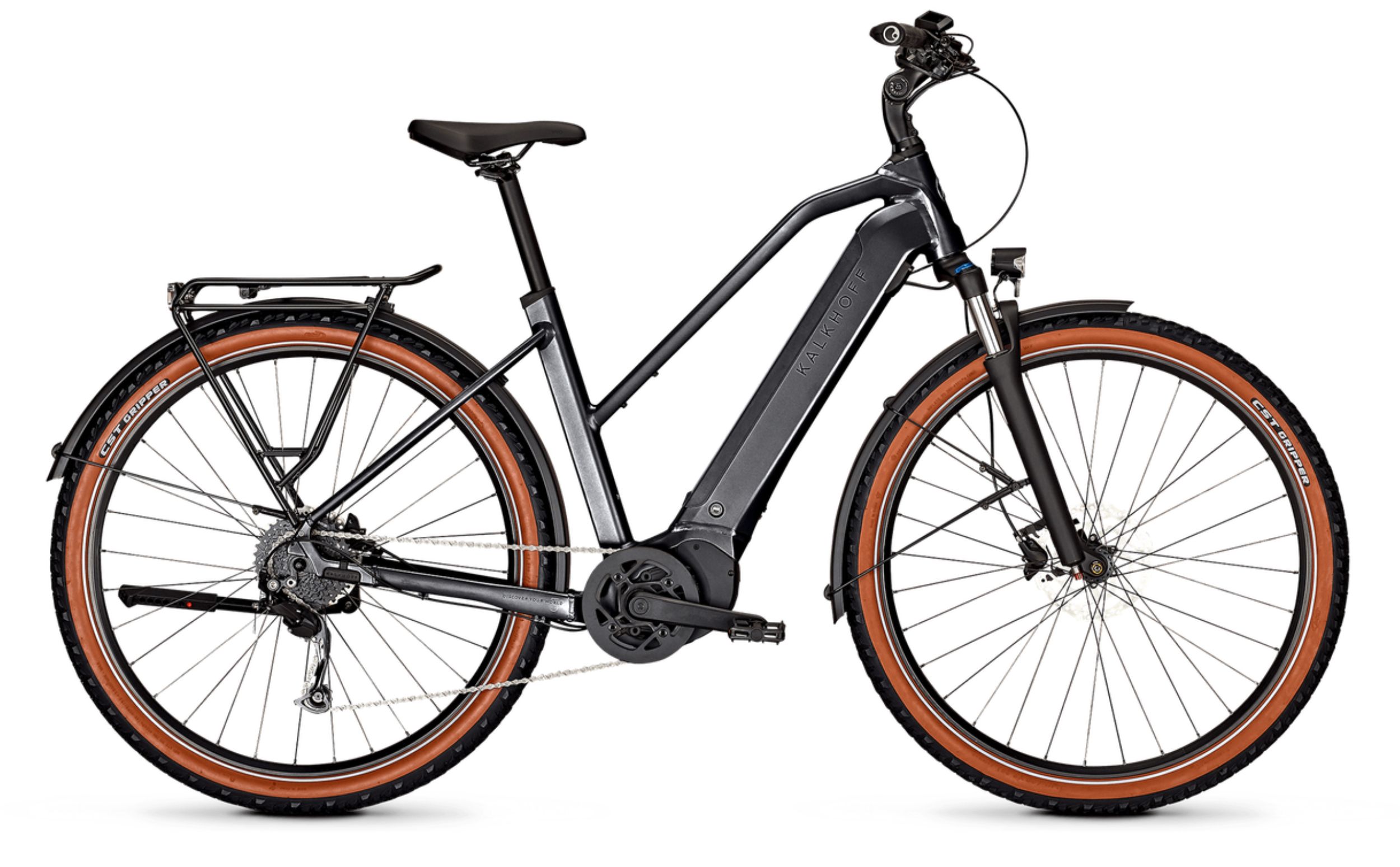
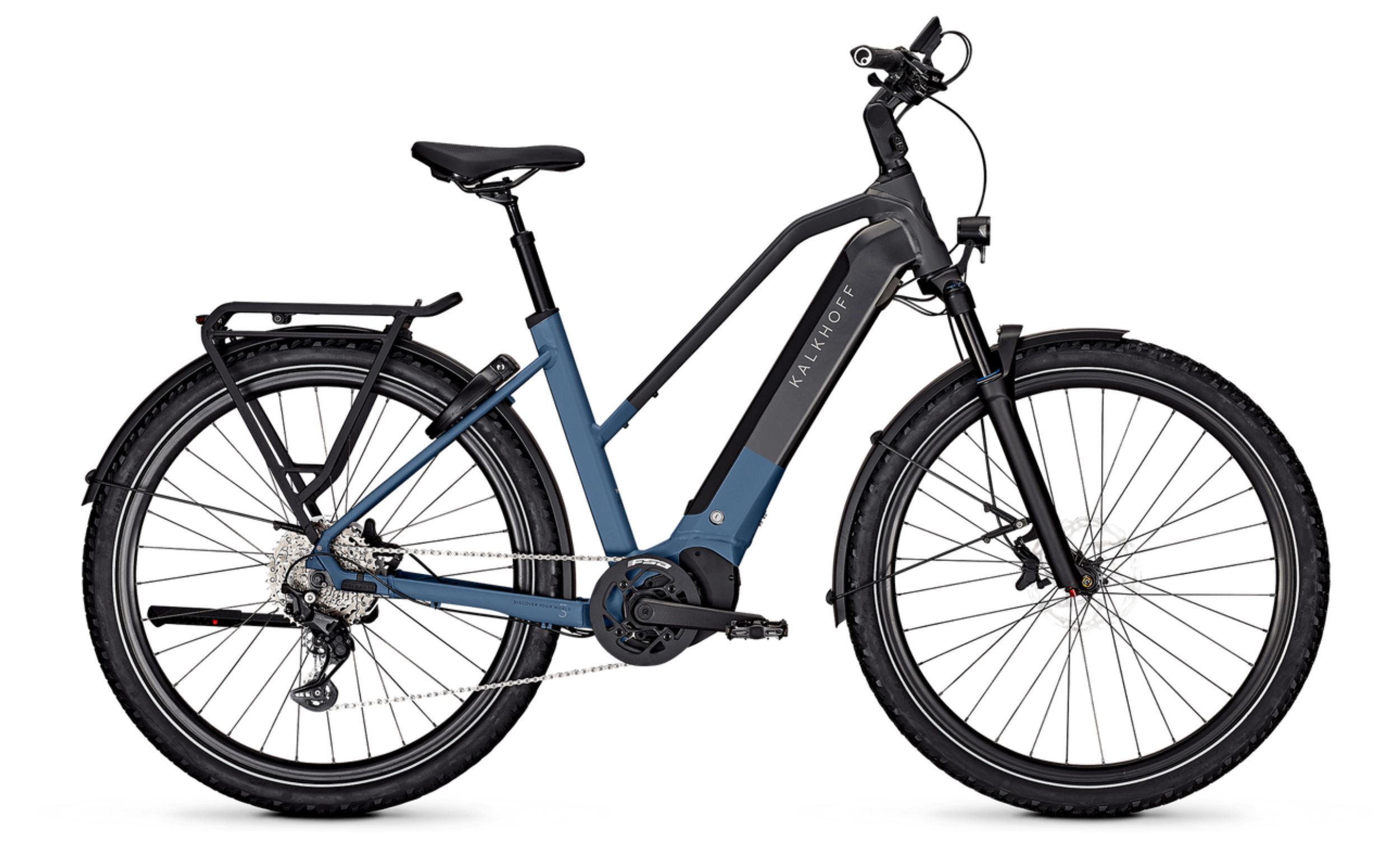
Trapezoidal frame:
- Similar construction to the diamond frame, but with a lowered top tube
- enables easier access and offers a good balance between comfort and stability
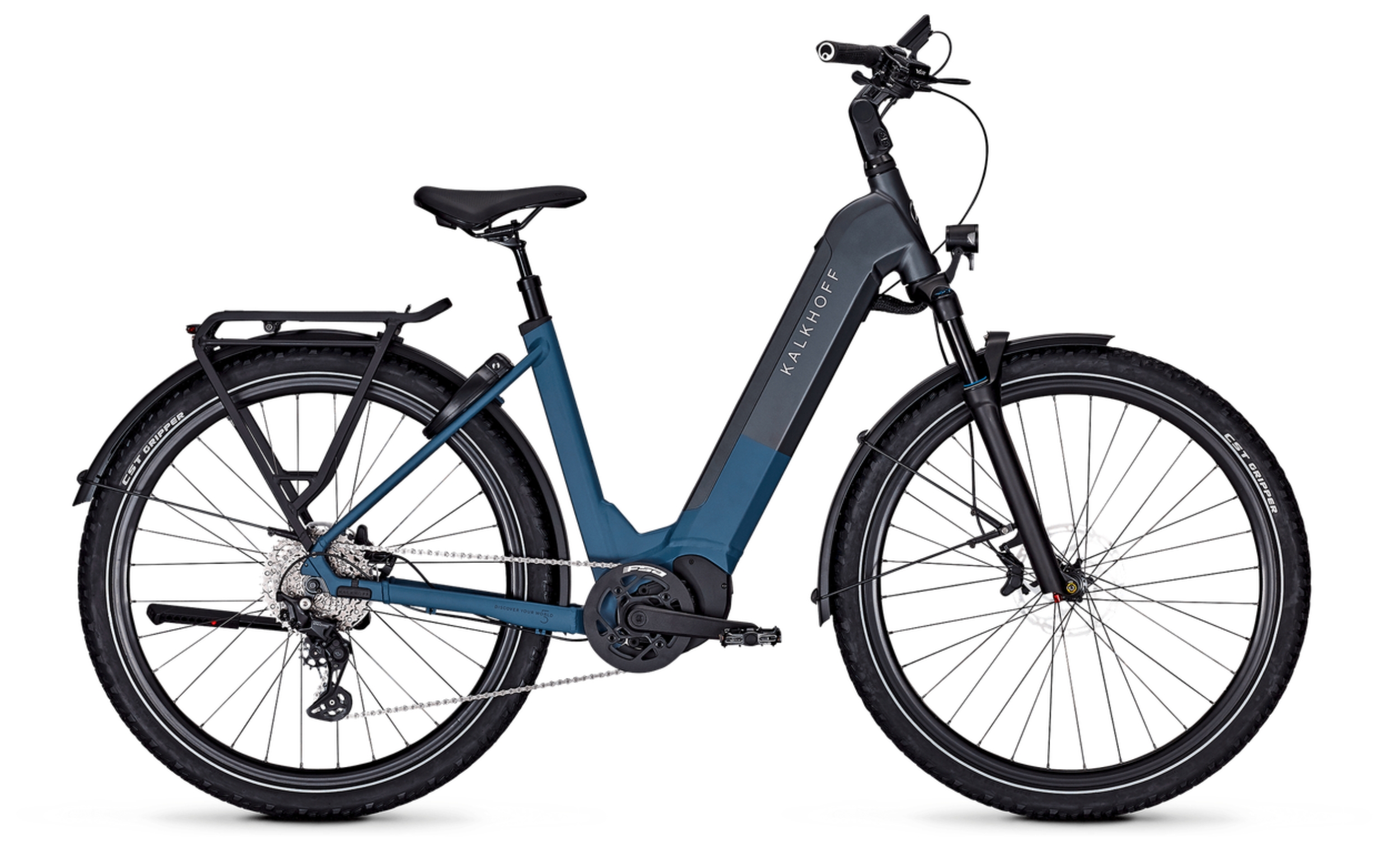
Step-through frame:
- Designed with an extremely low top tube
- Particularly comfortable for older riders or people who prefer an easy entry point
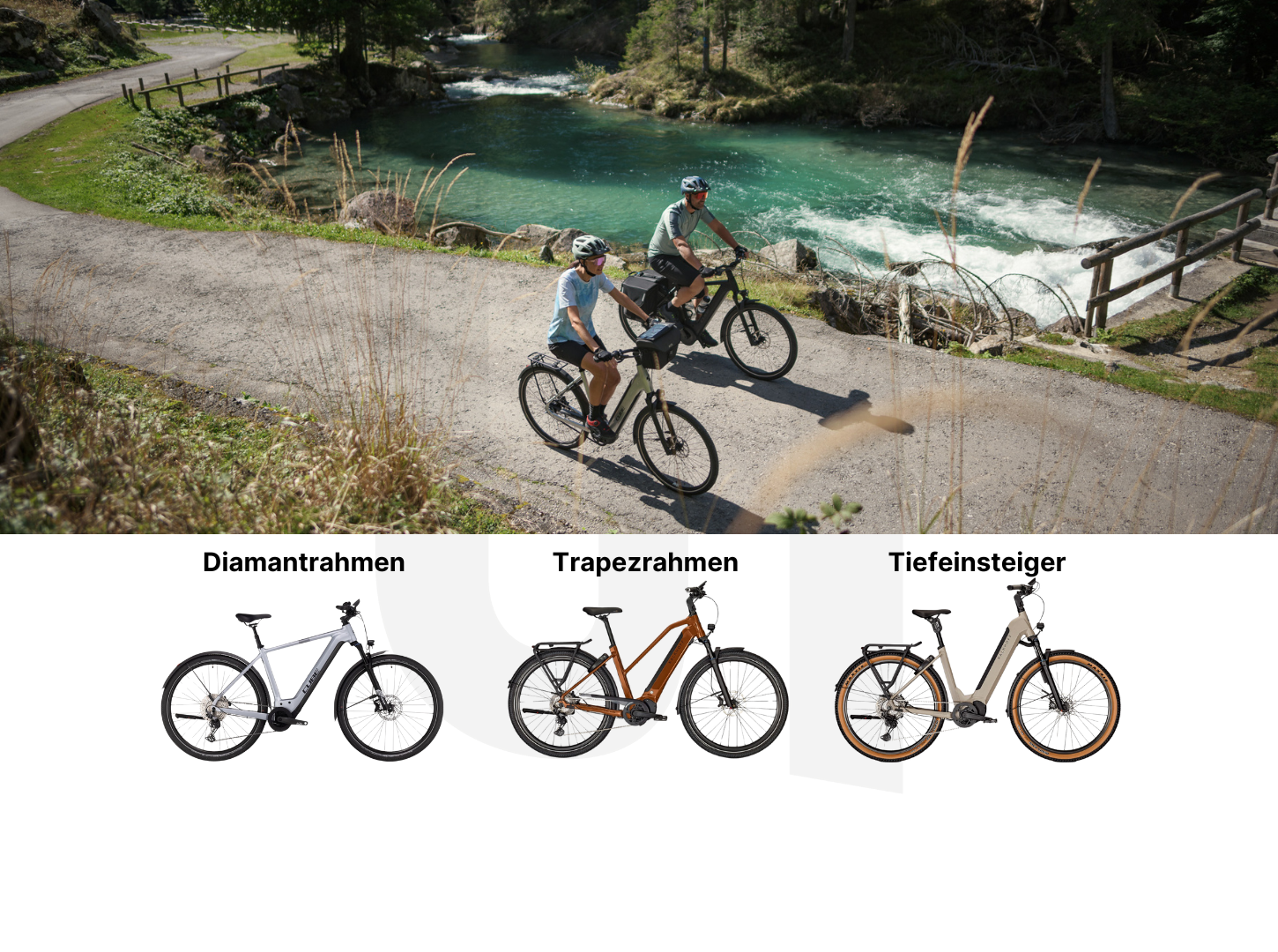
These frame shapes not only offer different levels of riding comfort, but are also specifically adapted to the needs of men and women. You will therefore find models under trekking e-bikes for women as well as trekking e-bikes for men - each optimised for specific requirements.
Motor and battery: the heart of your trekking E-bike
The performance of your E-bike depends largely on the motor and battery. A powerful motor, often from brands such as Bosch, Shimano or Yamaha, imitates the natural power of your pedalling. Combined with a high-quality lithium-ion battery (e.g. Bosch 625Wh Powertube or Shimano STEPS EP800), you can enjoy an impressive range and constant support, even on longer and more demanding rides.
Range tips:
- The range varies depending on the support level, riding style and terrain.
- Regular care of the battery and proper storage will increase its service life.
This will make your trekking e-bike a reliable companion even in mountainous regions.
Gears and brakes: safety and comfort on your tours
Modern e-trekking bikes are equipped with innovative shifting systems (often derailleur gears or hub gears) and high-quality hydraulic disc brakes. These components guarantee
- Safe deceleration: Even in wet conditions, disc brakes offer constant braking power.
- Easy gear changes: High-quality gear systems support you on steep climbs without great effort.
For special requirements, such as an integrated ABS system, find out about the different models and their advantages before you buy.
Equipment and accessories for trekking e-bikes
A trekking e-bike should be comprehensively equipped to guarantee you safety and comfort. Typical equipment features include:
- StVZO-compliant equipment: including lights, reflectors and a bell so that you are safe on the road.
- Mudguards and pannier rack: Robust and practical for staying protected in the rain and transporting additional luggage.
- Suspension: Suspension forks or full suspension increase comfort on uneven surfaces.
- High-quality tyres: Specially developed to offer optimum grip on asphalt and light terrain.
These additional options help to ensure that your experience on a trekking e-bike is always pleasant and safe.
Trekking e-bike vs. e-mountainbike - which e-bike is right for you?
The choice between a trekking e-bike and an e-mountainbike depends on your individual area of use. We have summarised the following features in a table to help you compare them:
| Feature | Trekking e-bike | E-mountainbike |
| Area of use | City, roads, easy terrain | Rough, technical terrain, trails |
| Comfort | High riding comfort for long distances | Sporty and robust, less comfort |
| Equipment | Fully equipped with StVZO-certified equipment | High-quality suspension and off-road tyres |
| Motor assistance | Range up to 25 km/h, ideal for commuters | Partially more powerful for steep climbs |
Conclusion: If you are mainly travelling in the city and on longer, flat routes, a trekking e-bike is the perfect choice. For technical off-road adventures, however, an e-mountainbike is better suited.
Buying advice: How to find the perfect trekking e-bike
Before you buy a trekking e-bike, you should clarify a few key questions:
- How and where will you mainly be riding? - Do you commute into the city every day or are you planning extended off-road tours?
- What motor power and battery capacity do you need? - Think about what range is sufficient for your tours.
- Which frame shape suits your body best? - Decide between a diamond frame, trapezoidal frame or step-through frame.
- What additional equipment is important to you? - Look for lighting, pannier rack and mudguards that meet your needs.
- What price-performance ratio is acceptable to you? - There are models in different price ranges.
Compare test reports and reviews, for example under "E-bike trekking test winner", to make an informed purchase decision.
Maintenance and care of your trekking e-bike
Regular maintenance guarantees a long service life and optimum functioning of your E-bike. Pay attention to this:
- Brakes: Regularly check brake pads, brake fluid and the function of the disc brakes.
- Tyres: Check the air pressure and condition of the tyres, especially after off-road tours.
- Electrical components: The battery, motor and display should be checked regularly for damage or wear.
- Battery care: Charge the battery regularly and store it in a cool place to extend its service life.
With good care, your trekking e-bike will withstand even the most demanding tours.
Legal aspects of trekking e-bikes
When it comes to the law, a distinction is often made between pedelecs and S-pedelecs:
- Pedelecs: Provide assistance up to 25 km/h and are road legal in many countries without the need for a driving licence.
- S-pedelecs: Can reach speeds above 25 km/h and are therefore often subject to stricter regulations, including compulsory insurance and helmet requirements.
Make sure that you comply with the local legal regulations in order to get out and about without any problems.
Trends and developments in trekking e-bikes
The world of trekking e-bikes is constantly evolving:
- Smart technology: many models can be controlled and monitored via smartphone app - from statistics on riding performance to battery monitoring.
- Improved battery technology: Innovative batteries ensure longer journey times and shorter charging cycles.
- Lighter materials: Advances in material technology enable lighter frames without sacrificing robustness.
- Integrated safety systems: New technologies such as ABS and the integration of anti-theft systems make your bike safer.
These developments not only improve the performance, but also the user-friendliness and safety of your bike.
Tips for everyday use
Another important aspect when buying a trekking e-bike is how it fits into your everyday life. Are you planning short city rides and longer weekend tours? Then it's worth investing in a model with versatile features. Practical tips:
- Plan your route: Use route planning apps to find easily navigable paths and routes of interest to tourists.
- Regular maintenance: Arrange regular check-ups at your workshop to keep your brakes, gears and battery in top condition.
- Accessories: Supplement your bike with suitable accessories such as a sturdy pannier rack or a waterproof bike bag - so you are prepared for any situation.
The combination of these tips will ensure that your new trekking e-bike not only works technically flawlessly, but also provides you with optimum support for all your daily challenges.
FAQs
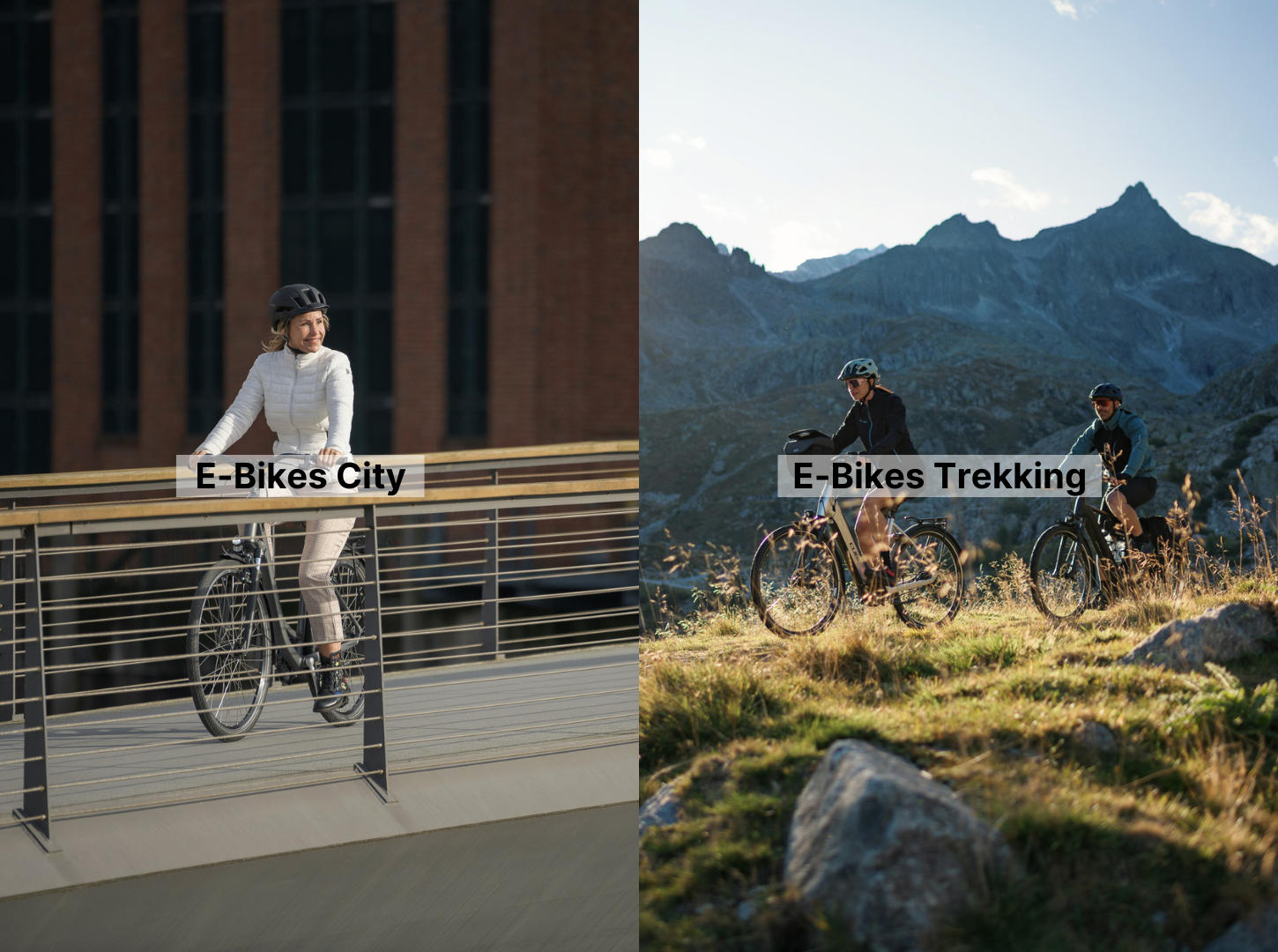
Was ist der Unterschied zwischen einem Trekking E-Bike und einem City E-Bike?
Während City E-Bikes speziell für den urbanen Raum und kurze Strecken konstruiert sind, bieten Trekking E-Bikes einen robusten Rahmen und leistungsstarke Motoren, die lange Strecken und diverse Terrains meistern. So findest du den idealen Begleiter, egal ob in der Stadt oder auf der Landstraße.
Welche Reichweite hat ein Trekking E-Bike?
Die Reichweite variiert je nach Motorleistung, Akkukapazität, Unterstützungsstufe, Terrain und Fahrstil – in der Regel liegt sie zwischen 80 und 150 km. Eine regelmäßige Pflege des Akkus kann die Reichweite zusätzlich optimieren.
Welche Marken sind empfehlenswert für Trekking E-Bikes?
Marken wie Bosch, Shimano, Kalkhoff, Cube, BMC und Hercules sind in der Branche etabliert und bieten qualitativ hochwertige Produkte, die sowohl in puncto Technologie als auch in Sachen Langlebigkeit überzeugen.
Worauf sollte ich beim Kauf eines Trekking E-Bikes für Damen achten?
Beim Kauf eines E-Trekkingbikes für Damen ist vor allem die passende Rahmengeometrie entscheidend. Achte auf Modelle, die einen einfachen Einstieg (z. B. Tiefeinsteiger) und ergonomische Designs bieten. Informiere dich außerdem über spezielle Ausstattungsmerkmale, die auf die Körperproportionen abgestimmt sind.
Worauf sollte ich beim Kauf eines Trekking E-Bikes für Herren achten?
Für Herren ist eine robuste Rahmenkonstruktion und eine sportliche Fahrposition wichtig. Modelle mit Diamantrahmen und leistungsstarken Motoren sind hier oft besonders beliebt. Achte zudem auf Ausstattungsvarianten, die den täglichen Anforderungen gerecht werden.
E-trekking bikes by price
Find your perfect e-trekking bike at STATERA Bikes!
Ready for your next adventure? Discover our range now!
Click here for our current offers!
E-trekking bikes by brand
Electric trekking bikes by frame shape
E-trekking bikes by wheel size